1 domain name, 2 summary decisions in 2 months, 2 different outcomes

invincible

Member
Joined
Sep 11, 2024
Posts
54
Reaction score
25
Trophy points
18
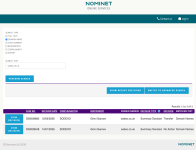
Just a bit of information about something I noticed today. See screenshot attached.

1 domain name <sodeo.co.uk>. 2 DRS summary decisions in 2 months. Same Complainant. Same Respondent. 2 different Independent Experts. 2 different outcomes. No reference in the second summary DRS decision to the first summary DRS decision. I don't appear to be able to attach PDF's to this post but you're invited to download them from Nominet's site.
Screenshot 2026-03-14 at 12.14.55.png
 
Case 28408, dated 14/01/2026, included 'The Complainant has shown to my satisfaction that it has Rights in the name/mark SODEXO. However, it has not adduced any evidence to show that the Domain Name takes unfair advantage of or is detrimental to those Rights. The bald assertion that the use of the word ‘sodeo’ is confusingly similar to the Complainant’s name/mark is not enough in my view, to justify a finding that the Domain name is an Abusive Registration.'

Case 28683, dated 12/03/2025, makes no reference to case 28408. I presume the Complainant improves on case 28408 and perhaps explains why in their opinion the Domain Name took unfair advantage of or was detrimental to their Rights in the mark SODEXO which resulted in the second Independent Expert concurring and directing for transfer of the Domain Name. Either that or perhaps the use of the Domain Name changed during the period of time between the two cases, although given how short the time period between the two cases is I would be surprised if that occurred.

It might have been helpful if the second Independent Expert had commented in the decision for case 28683 to clarify what changed between it and case 28408 although I am aware that Experts are not obliged to do so.
 
Last edited:
Why would @GreyWing want to pay for an expensive appeal if you can just re-file a cheap DRS?

There's nothing on archive to say if anything changed, but like you say the short time period makes it extremely unlikely. Can you just keep re-doing the original DRS process until you get a result you like?

Why wasn't this one forced into an appeal if they didnt like the original decision? Outside of some sort of drastic new mis-use I can't see why anyone can file a new DRS so quickly, rather than use the appeal process thats in place already?
 
Last edited:
@Marek it seems like it is possible, perhaps under circumstances, to simple refile. This was a simple case where the Respondent didn't submit a response and the Complainant may have made a calculated guess that the Respondent wouldn't respond a second time. I wonder the same in respect of @GreyWing and his recent appeal submission. If he loses the appeal, can he can file a new complaint and pay for another summary decision?

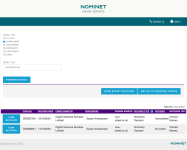
I've found another similar case. See screenshot attached.

1 domain name <viva-street.co.uk>. 2 DRS summary decisions in 2 months. Same Complainant. Same Respondent. 2 different Independent Experts. 2 different outcomes, but on this occasion the Complainant asked for the domain name to be Cancelled and not Transferred. No reference in the second summary DRS decision to the first summary DRS decision.

The first DRS Summary Decision for this domain name included a paragraph with the text "There is no evidence that the Complainant is the same entity as the homonymous company in Malta. Neither is there any identifying information on the Complainant’s website that might indicate or assist in demonstrating that it is the same company. The Complainant has failed to prove that it has any rights in the trademark relied upon and the application must be refused."

The domain name in this case appears to have a current registration date of 2024-04-11 <https://nominet.uk/lookup/?domain=viva-street.co.uk> which falls between the two summary decision dates. I presume the domain name was cancelled and registered again but the current registration date falls between the date of the first DRS Summary Decision 2024-10-14 and the date of the second DRS Summary Decision 2024-12-19, therefore I cannot be certain of what happened.

Screenshot 2026-03-15 at 00.55.46.png
 
Nominet DRS Policy Section 21, page 11 <https://media.nominet.uk/wp-content/uploads/2017/10/17150434/final-proposed-DRS-policy.pdf> reads:

21. Repeat Complaints
21.1 If a complaint has reached the Decision stage on a previous occasion it may not be reconsidered (but it may be appealed, see paragraph 20) by an Expert. If the Expert finds that a complaint is a resubmission of an earlier complaint that had reached the decision stage, he or she shall reject the complaint without examining it.
21.2 In determining whether a complaint is a resubmission of an earlier complaint, or contains a material difference that justifies a re-hearing the Expert shall consider the following questions:
21.2.1 Are the Complainant, the Respondent and the domain name in issue the same as in the earlier case?
21.2.2 Does the substance of the complaint relate to acts that occurred prior to or subsequent to the close of submissions in the earlier case?
21.2.3 If the substance of the complaint relates to acts that occurred prior to the close of submissions in the earlier case, are there any exceptional grounds for the rehearing or reconsideration, bearing in mind the need to protect the integrity and smooth operation of the DRS;
21.2.4 If the substance of the complaint relates to acts that occurred subsequent to the close of submissions in the earlier decision, acts on which the re-filed complaint is based should not be, in substance, the same as the acts on which the previous complaint was based.
21.3 A non-exhaustive list of examples which may be exceptional enough to justify a re-hearing under paragraph 21.2.3 include:
21.3.1 serious misconduct on the part of the Expert, a Party, witness or lawyer;
21.3.2 false evidence having been offered to the Expert;
21.3.3 the discovery of credible and material evidence which could not have been reasonably foreseen or known for the Complainant to have included it in the evidence in support of the earlier complaint;
21.3.4 a breach of natural justice; and
21.3.5 the avoidance of an unconscionable result.

Unfortunately in the two DRS cases I have cited in this thread, there is no published explanation detailing why rehearings were granted. Both rehearings resulted in summary decisions and the independent experts chose not to publish any substantive details.
 
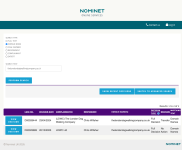
An example of two DRS Full Decisions for domain name <thelondondogwalkingcompany> dated within 6 months of one another. Same domain name, same Complainant, same Respondent, two different outcomes. Since these are both Full Decisions, not Summary Decisions, the Independent Expert in case 26444 does refer to the previous case 25985 and to section 21 of the DRS Policy. The Expert’s Full Decision provides insights into why the Complainant was permitted to start again and wasn't left with the only option which was to Appeal.

The Expert in case 26444 writes:

"The present case is indeed a repeat complaint which, on a strict interpretation of paragraph 21.1 above should be rejected. It was submitted following the decision of the expert in the earlier case to dismiss it, ‘without prejudice to the Complainant’s right to bring a further complaint under the Policy.’ The views of experts may differ with respect to the right to bring a further complaint under these circumstances. Having dismissed the earlier case, it would have open to the expert, for example, to remind the complainant of its right to appeal his decision, rather than leave the door open for a re-submission at first instance notwithstanding paragraph 21.1 of the DRS Policy. However, Paragraphs 21.2 and 21.3 of the Policy allow me discretion to consider whether there are ‘material differences’ to the first complaint, or if ‘exceptional grounds’ are present to justify my consideration of it. In the hope of avoiding an unconscionable result, as contemplated by paragraph 21.3.5 above, I will consider this complaint in the usual way. I will examine the parties’ submissions further below, but in summary, the ‘material differences’ I refer to consist of evidence that the Complainant has since 2017 traded under a name which is identical to the Domain Name, suggesting that the Complainant may have the necessary rights to bring this complaint. The ‘exceptional grounds’ I refer to arise from the fact that the Domain Name resolves to a website dedicated to criticism of the Complainant and that the Respondent, in his Response to the Complaint, admits that this was his intention in registering the Domain Name and in his on-going use of it."

Screenshot 2026-03-15 at 15.04.43.png
 
@invincible, I think you're over-analysing the first two pairs of cases you cite.

The fact that in both instances the expert in the second DRS failed to mention the first DRS suggests to me that neither of them knew they were looking at a repeat complaint.

Section 5.3 of the Experts' Overview says "Whether or not a Complaint is a repeat or re-filed Complaint is a matter for the Expert", so it would seem that the onus is on the expert to check this.

If neither of them could be bothered to spend a few seconds doing that check it does rather support @GreyWing's assertion in the other thread that some of these experts don't know what they're doing.

@GreyWing, did you consider a new DRS rather than an appeal?

As per @invincible's post above, section 21.3 of the DRS Policy says: "A non-exhaustive list of examples which may be exceptional enough to justify a rehearing under paragraph 21.2.3 include.....the discovery of credible and material evidence which could not have been reasonably foreseen or known for the Complainant to have included it in the evidence in support of the earlier complaint".

You say in your appeal that you "did not plead the bona vacantia point specifically because the Respondent's identity was unknown", which would seem to fall squarely within the scope of this section.
 
Last edited:
Section 5.3 of the Experts' Overview says "Whether or not a Complaint is a repeat or re-filed Complaint is a matter for the Expert", so it would seem that the onus is on the expert to check this.
I am presuming you are referring to 5.3 in this document.

‘5.3 What is a repeat complaint? [Paragraph 21 of the Policy].

A second or subsequent complaint lodged under the Policy by the same Complainant against the same Respondent in respect of the same domain name. These are discouraged and only permitted in very exceptional circumstances. If a Complainant is unhappy with a decision, ordinarily the appropriate step for the Complainant to take is to appeal the decision, not seek to have a second bite of the cherry. Whether or not a Complaint is a repeat or re-filed Complaint is a matter for the Expert.

Relevant cases:
DRS 01136: 1and1.co.uk (transfer)
DRS 01295 (appeal): bravissimo.co.uk (no action)
DRS 011491: sprayfine.co.uk (transfer)
DRS 09141: ameron-ppg.co.uk (no action)’

I am not presently willing to infer that the Experts in the later DRS cases concerning <sodeo.co.uk> and <viva-street.co.uk> were unaware of the earlier decisions merely because those decisions are not referenced in the subsequent Summary Decisions. By their nature, Summary Decisions provide only limited reasoning and factual background.

While it might be expected that Nominet would draw Experts’ attention to closely related prior decisions, I realise that the fact that this would be desirable does not necessarily mean that it occurs in practice.

The Complainant may have chosen to reference their original case, but we cannot be certain.
 
Last edited:
@GreyWing, did you consider a new DRS rather than an appeal?
I think probably two reasons that I didn't on this mate. First was because I wanted to tackle the narrative rather than just obtaining the domain name. The second reason was that it never crossed my mind. I always assumed that you had one shot at it and that was it, I'm sure I have read an appeals panel state that it puts the responsibility on you to get it right first time. I think they may have also been talking about introducing new evidence into the appeal stage, but this essentially does the same thing at a fraction of the price.

I wonder if there is any disclosure to how many re-submissions Nominet actually reject. Surely these can't be the only ones submitted and the actual acceptance rate is 100%?

Well, maybe.


The procedural failure here isn't solely with the experts, it sits with Nominet's intake process itself.

Section 21.1 is unambiguous. A complaint that has reached the decision stage may not be reconsidered. The appropriate remedy is appeal. That is the policy. Yet two documented cases demonstrate that firewall failing entirely, with no published explanation from Nominet as to why rehearing was permitted in either instance.

Nominet could identify repeat submissions automatically at the point of filing. The complainant, the respondent and the domain name are all known at intake. A basic cross-reference against prior decisions would catch every repeat submission before it reaches an expert. The fact that this check either doesn't exist or isn't being applied means the entire section 21 framework is dependent on expert diligence alone, diligence that these cases show cannot be assumed.

The deeper question is not whether individual experts missed prior decisions. The question is why Nominet's administration of its own process does not catch what its own policy explicitly prohibits. That is not an expert failure. That is a governance failure, and governance is Nominet's responsibility, not the expert's.

For an organisation that presents itself as the trusted steward of the .uk namespace, operating a dispute resolution system where the same complaint can reach the decision stage twice without explanation and without transparency is a serious accountability gap. It will not be the only one.
 
Show Recent Decisions 2026-03-21.jpg
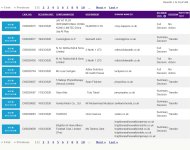
Someone at Nominet must be following this thread because they've decided to go one better with D00028430, which seems to have resulted in opposite outcomes on the very same day.

It's actually just an error in the list, but I thought it was funny, and of course it's yet another example of the DRS not quite working properly.

And I see Garth has won again, taking his score to 27-0. Well done that man, but I'm not sure why he's engaged a solicitor for the last four given that he was doing just fine without one.
 
Last edited:
Someone at Nominet must be following this thread because they've decided to go one better with D00028430, which seems to have resulted in opposite outcomes on the very same day.

It's actually just an error in the list, but I thought it was funny, and of course it's yet another example of the DRS not quite working properly.

And I see Garth has won again, taking his score to 27-0. Well done that man, but I'm not sure why he's engaged a solicitor for the last four given that he was doing just fine without one.
It's a duplicate upload with 'No Action' being incorrectly attributed to the first version. I presume once the upload is performed, if a member of staff has incorrectly flagged a decision as 'No Action' when it should be 'Transfer', it is not possible to simply correct the existing entry and it must be uploaded again. In this instance I presume they have forgotten to delete the first upload after uploading the second.

It may interest you to know that there are also duplicates of the same three DRS, but with identical outcomes, listed for lancasterconcrete.co.uk, wbafinancial.co.uk and glo.co.uk. There was a corrupted version of doublebubblebingocasino.co.uk uploaded which I informed staff about recently and this has been fixed. They uploaded it again but didn't remove the corrupted version until I emailed them a follow up. I am going to send them an email covering off all of these.
 
It's a duplicate upload with 'No Action' being incorrectly attributed to the first version. I presume once the upload is performed, if a member of staff has incorrectly flagged a decision as 'No Action' when it should be 'Transfer', it is not possible to simply correct the existing entry and it must be uploaded again. In this instance I presume they have forgotten to delete the first upload after uploading the second.

It may interest you to know that there are also duplicates of the same three DRS, but with identical outcomes, listed for lancasterconcrete.co.uk, wbafinancial.co.uk and glo.co.uk. There was a corrupted version of doublebubblebingocasino.co.uk uploaded which I informed staff about recently and this has been fixed. They uploaded it again but didn't remove the corrupted version until I emailed them a follow up. I am going to send them an email covering off all of these.

What makes this worth noting beyond the individual corrections is the pattern. These errors exist in a published decisions database that practitioners and domain owners rely on for precedent and research. Invincible found them through careful reading, not because Nominet caught them internally. An organisation managing critical national digital infrastructure should have data validation processes that catch duplicate and corrupted records before publication, not after a member of the public emails twice. The question worth asking is how many similar errors exist in decisions that nobody has looked at closely enough to notice.
 
I don't believe that finding a few errors in a database spanning decades is the smoking gun it may be being made out to be. The relevant question is what happened when the errors were reported, and the answer is they were fixed promptly.

The "had to email twice" framing sounds worse than I think it is. Someone [me] spotted something, followed up by email, and it was resolved. Any suggestion that automated validation should have caught everything beforehand is easy to assert but considerably harder to build.

Your closing question, about how many similar errors exist that nobody may yet have noticed, sounds ominous but it also invites the reader to assume the worst without any real basis for doing so. Two corrected records does not establish a pattern. If there is a genuine case to be made about broader data quality problems, it will need rather more than insinuation in my opinion.
 
A fair challenge on the scale point, though it rather misses the larger one.

The issue is not how many errors exist or how quickly they were corrected when reported. The issue is that they existed in a published decisions database that practitioners and domain owners rely on for precedent, and that Nominet's own processes did not catch them. The correction happening after external prompting is not evidence of a well functioning system, it is evidence of a system that depends on unpaid volunteers to do its quality control for it.

The "fixed promptly" framing also does some work it shouldn't. A corrupted upload that required two separate emails to fully resolve is not prompt by any reasonable standard. It is the minimum acceptable response to being told twice that something is broken.

As for the closing question being insinuation without basis, I would suggest that an organisation which cannot maintain basic data integrity in its published decisions database without external intervention has already provided the basis. The question of how much more exists unnoticed is not rhetorical. It is the entirely reasonable next question.

If Nominet's administration of the .uk namespace is sound, that soundness should be demonstrable without relying on members or outsiders to find the gaps.
 
In my opinion, your criticism raises fair points, but it goes further than the evidence permits.

Errors in a published decisions database are regrettable and may properly prompt questions about quality control. But it does not follow that errors identified externally, such as those I identified, demonstrate systemic failure. In many organisations, mistakes are corrected only once noticed by users. That is unfortunate, but not proof of dysfunction.

As to the suggestion that undiscovered errors may exist, in my opinion that may justify asking whether further checks are warranted. It cannot stand as evidence of broader unreliability. There is a distinct gap between criticism of database maintenance and criticism of Nominet's administration of the .uk namespace generally.

In my opinion the fair conclusion from this is a limited one. These incidents may justify questions about the robustness of the database's review processes. They do not, without more, justify wider claims of institutional incompetence.
 
Good morning. Nobody claimed that a handful of database errors alone constitutes proof of systemic failure. What was said is that errors in a published decisions database that practitioners rely on for precedent, which were not caught internally and required external reporting to resolve, are a data point about process quality. That is not overstating the evidence. That is reading it accurately.

The distinction you draw between database maintenance and broader namespace administration would carry more weight if Nominet's record elsewhere were cleaner. In my opinion, It is not. The database errors sit alongside documented failures in DRS governance, the repeat complaint issues raised earlier in this thread, and an organisation that has consistently demonstrated it responds to external pressure rather than anticipating problems internally.

Each of these individually may be dismissible as isolated. Together they describe an organisation whose quality control depends on being watched rather than being sound.

In my opinion, the fair conclusion is not limited to asking whether further database checks are warranted. The fair conclusion is that an organisation entrusted with critical national digital infrastructure should not need its members and/or outsiders to keep its published records accurate.
 
And I see Garth has won again, taking his score to 27-0. Well done that man, but I'm not sure why he's engaged a solicitor for the last four given that he was doing just fine without one.
Are you sure he's not the solicitor? Are you sure he's not a DRS panellist? Are you sure he even exists? 🤔
 
What stood out to me isn’t just the different outcomes, but how much depends on how the panel reads intent in that specific moment. Same name, same basic facts, but slightly different framing or emphasis can shift how it’s interpreted.
 
What stood out to me isn’t just the different outcomes, but how much depends on how the panel reads intent in that specific moment. Same name, same basic facts, but slightly different framing or emphasis can shift how it’s interpreted.
Framing and emphasis certainly play a role in any expert determination, and that's a fair observation in isolation.

The issue this thread has been exploring goes somewhat deeper than interpretive variation between experts though. Two decisions on the same domain with opposite outcomes, with no published explanation for why a repeat complaint was accepted at all, isn't a question of how intent was read. It's a question of whether the procedural safeguards in section 21 of the DRS Policy were applied. Framing doesn't explain the absence of any reference to the prior decision. Process does, or rather the failure of it.

The more interesting question isn't why two experts read the same facts differently. It's why Nominet's administration of its own system doesn't catch repeat submissions before they reach an expert at all.
 
Back
Top